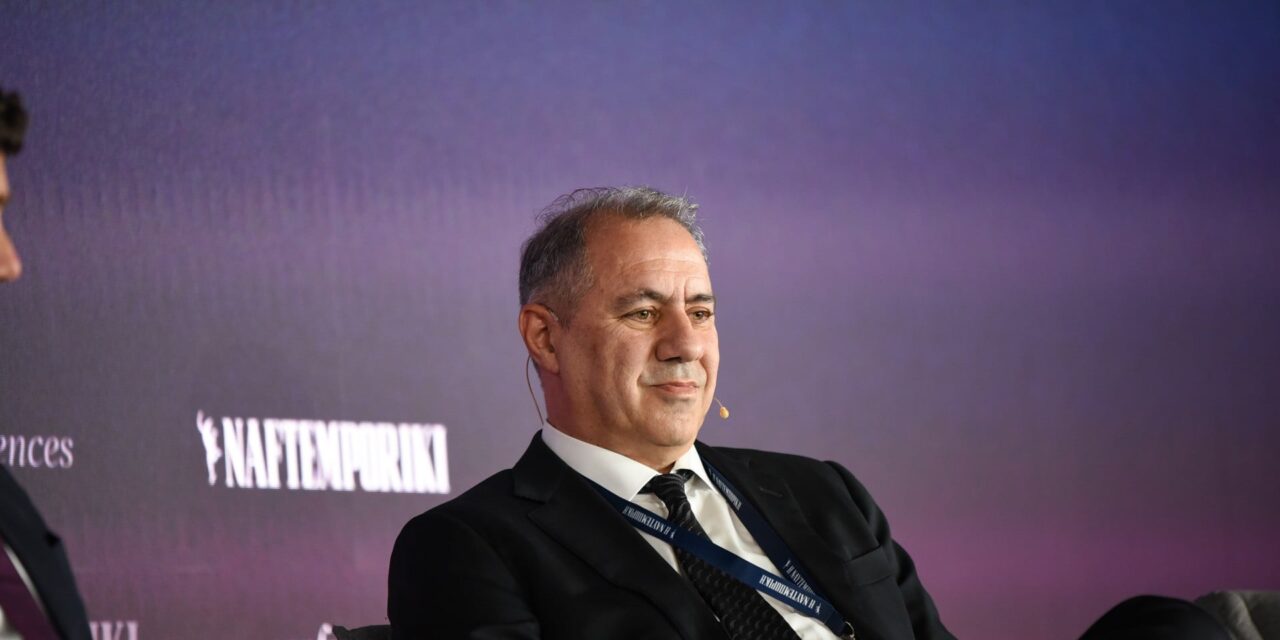
The decarbonization initiative as it is currently being discussed at the IMO is “utopian,” John Xylas, Chairman and CEO of Ariston Navigation, said at Naftemporiki’s 10th Shipping Conference.
“Unfortunately, scientists and engineers have stepped aside in favor of politicians and taxation, which apparently is the main objective of this plan,” Xylas said, adding: “There is no zero-carbon fuel that is simultaneously available, safe, economically viable and scalable on a global level.”
Analyzing the overall environmental footprint of each fuel — from production to combustion — he noted:
LNG: It clearly helps with compliance regarding sulfur and nitrogen oxides; however, most scientific studies indicate that the overall benefit in terms of carbon dioxide reduction remains debatable. Nevertheless, it is a transitional solution in which enormous investments have already been made.
LPG: It has slightly lower carbon dioxide emissions than oil, but studies show that the overall environmental benefit is limited, while its availability is also constrained.
Hydrogen: Αll hydrogen currently produced is derived either from natural gas or coal, meaning it generates high emissions during the initial stages of production. Truly green hydrogen remains extremely limited, as it requires “green” electricity generated from renewable energy sources. It also requires enormous quantities of energy, is difficult to store and transport, and raises significant safety concerns. In…